
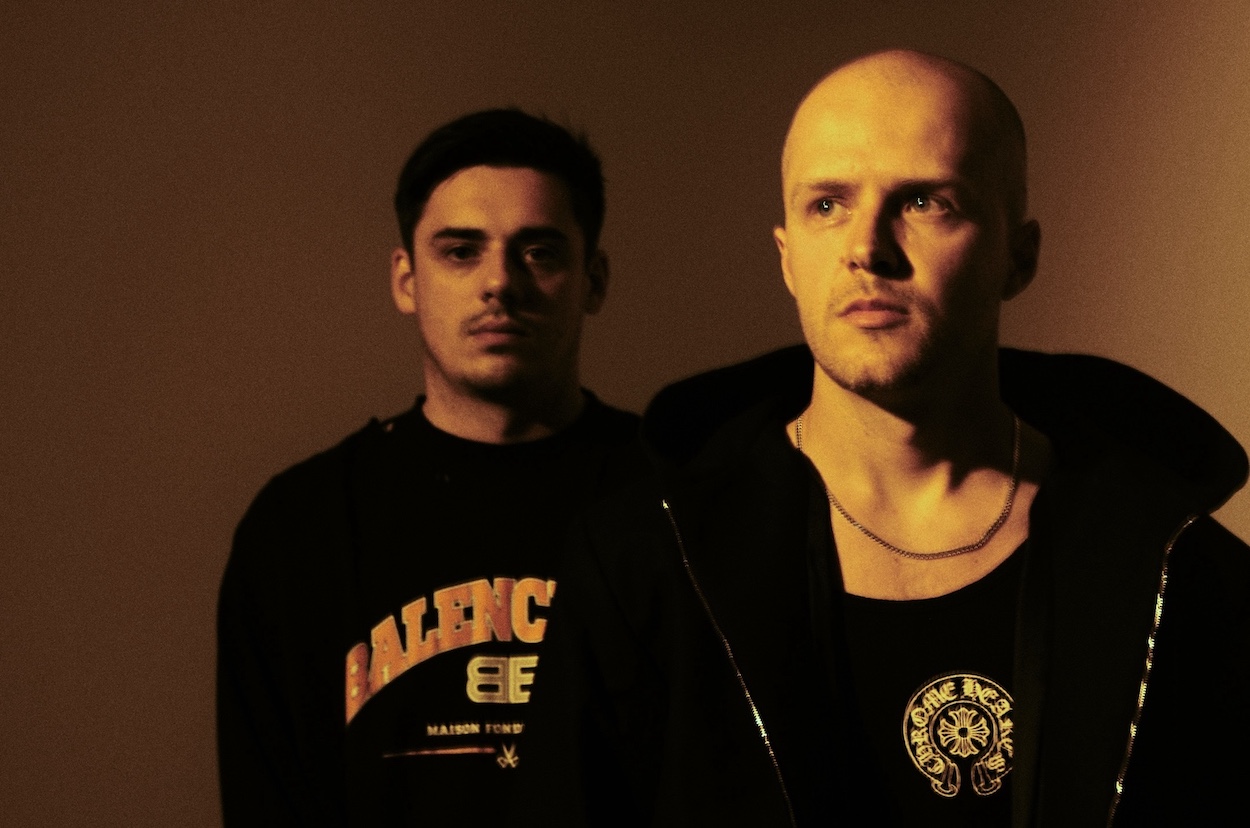
HotLap formed after both artists spent years writing and producing for others, a background that taught them how to make clear, structured records quickly. The project gave them room to work differently. Early tracks like “Shelter” were more vocal led, but regular touring has shifted their focus toward rhythm and how a record actually feels in a room.
In this interview they talk about learning arrangements from crowd reaction, keeping strong ideas simple, and sometimes dropping tracks entirely after testing them live. They discuss moving toward slower-burn records that reveal themselves over time, using their own vocals more often, and avoiding expectations turning into rules.
Early releases like “Shelter” felt quite vocal led, while records you’ve been road testing recently land more physically in a room. Is that shift intentional for this year or just a natural result of touring?
It is mostly natural. When you play regularly, you start feeling how rhythm carries a space in a different way than a topline does. That does not mean we are moving away from vocals, but we are more aware of the physical side now. The room teaches you what lingers in people’s bodies, not just in their heads. You both came from writing for other artists where clarity and structure matter.

With HotLap, how do you decide when to keep a simple idea simple rather than developing it further?
We ask whether the idea already says what it needs to say. If a loop or a motif feels strong on its own, adding more can dilute it. In the past we might have developed everything into sections. Now we are more comfortable letting something repeat if the feeling stays intact.
After a year of regular shows, has the crowd reaction changed what you consider a finished arrangement compared to when the project started?
Yes. Early on, we were definitely more concerned with how a track read in the studio. Now we think about how it affects the people in a room. Sometimes a section that feels sparse on headphones is exactly what gives people a break while dancing. So finished now means it flows naturally in both contexts, not that it is full or cluttered.
You’ve mentioned that speed is important in your workflow. Has playing tracks out for months made you more cautious about committing to decisions?
It has made us more observant, not slower. We still move quickly at the start because that is where the instinct lives. But playing a track live shows you small details you just can’t hear at home. So we might tweak timing or energy after testing, but the core idea is usually decided early, or sometimes we play it and noone likes so we scrap the whole thing!
Some of your material translates immediately in a club, other tracks reveal themselves over time. Going into this next run of releases, which type are you more interested in making?
We are leaning toward the slower burn but they both have their uses in a set or a playlist while listening at home. Immediate tracks are useful, but also the ones that grow on people tend to last longer. We like records that settle into a set and reveal depth rather than shouting for attention straight away.
Collaboration has been central so far. For the coming year, are you looking for recognisable voices or unknown ones that let you shape the record more freely?
We are open to both, but freedom matters more than recognition. A voice that fits the feeling of the track is more important than a name attached to it. Sometimes an unknown artist gives you more space to experiment without expectation. Coming from our production backgrounds we’ve worked with some of the most incredible vocalists but also the majority of our recent songs have actually been our own vocals. So right now we’re just focused on impactful collaborations, either on a vocal or production side.
Touring exposes you to different listening habits in different regions. Have certain cities pushed you toward writing differently, or do you try to keep the music detached from geography?
Different cities definitely have different energy, but we try not to tailor the writing to a map. If we start writing for one place, it can narrow the sound. We would rather make something honest and let it travel where it makes sense. In previous conversations you described HotLap as a place without briefs. Now expectations exist, even if informal.
How do you stop that from turning into self imposed rules?
By reminding ourselves why we started. The project began as a space without pressure. If we feel expectations creeping in, we usually strip the process back to just the two of us and a blank session. The music has to feel free and fun.

When a track works live but feels too direct on headphones, do you adjust it for listening environments or accept that not every record has to serve both?
We try to respect the core purpose of the track. If it was written for a room, it should carry that energy. We might refine details so it feels balanced at home, but we do not want to dilute its intent. Not every record needs to serve every context perfectly.
Looking ahead twelve months, what would count as a meaningful step forward for the project beyond audience growth?
Clarity and growth. If the body of work feels cohesive and unmistakably ours, that would mean more than numbers. Also feeling more confident on stage and in the studio, knowing we are building something steady rather than reacting. That sense of identity settling in would be real progress.