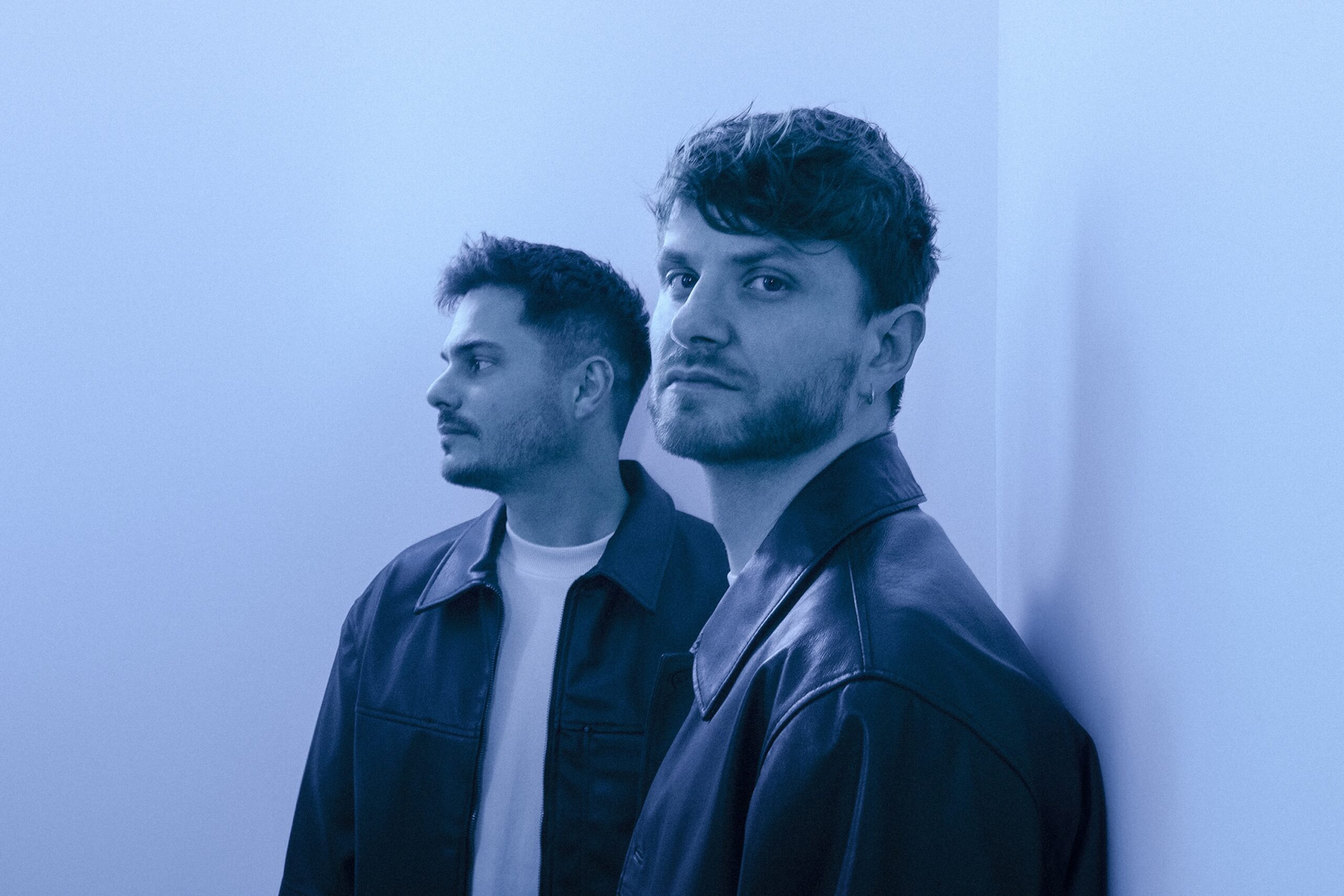
Electronic music often lives in the space between motion and emotion — a place where rhythm becomes a vessel for memory, and the dancefloor turns into a site of reflection as much as release. For Angara, that balance has always been essential. The French duo’s music moves forward with purpose, yet remains deeply anchored in feeling, shaped by personal history, lived experience, and an instinctive sense of storytelling.
With Out at Sea, Angara distill that philosophy into one of their most evocative releases to date. Marking their debut on Embassy One, the track unfolds with cinematic patience, pairing expansive production with the introspective, soul-baring vocals of Ren Ocean. It’s a song about first connections and lasting impressions — about the moments that guide us, drift away, and somehow remain within us all the same.
Longtime friends Quentin and Loris have built Angara around contrast: intimacy and energy, softness and drive, vulnerability and movement. In this conversation, they reflect on the memories and emotions that shape their sound, the natural chemistry behind their collaboration with Ren Ocean, and the creative clarity that comes with entering a new artistic chapter.
Your new single “Out at Sea” carries this beautiful tension between movement and memory. When you were creating it, what emotional landscape were you trying to capture?
That’s exactly it. We wanted to capture this relationship with memory, the way our memories move forward with us. To capture the feeling that our encounters and connections stay deeply rooted in us, even as time passes and we keep moving forward. We tried to capture that moment when you remember something that lives so deep inside you, something that shaped who you are today.
The track revolves around the idea of a “first real connection” — something unforgettable yet fluid. How did that concept emerge during the writing process with Ren Ocean?
The track was built in three stages. Initially, the instrumental was called “Deliverance” and already evoked this notion of a first real connection with someone. That first real connection is something unforgettable that shapes us. It teaches us what a strong relationship is, but also what we discover about ourselves and how these intense emotions transform us. When we sent the instrumental to Ren Ocean, he immediately grasped the theme, which also resonated with him. He sent us a first version that really hit the mark, and we refined it together afterward.
One trademark of your music is the cinematic feeling it evokes, almost like a narrative unfolding. How consciously do you think about storytelling when you produce?
For us, music is all about stories and emotions. We see it the way you’d watch a film or series: there’s a script, something that unfolds. All our compositions come from memories, personal stories, or stories we’ve heard. And like in a film, there’s a beginning, a middle, an end. When we compose, ideas naturally come with stories, often very realistic ones. Actually, we don’t always compose together. And when we share our drafts, before the other one works on it, we tell each other the story, the images, the emotions behind it.
You’ve known each other since your teenage years, drifted apart, and then reunited to form Angara. How does that shared personal history shape the way you collaborate today?
We’ve known each other for a long time, and that’s how we realized how complementary we are. We act a bit like brothers, with a lot of similarities in our journeys while being very different. When one has an idea in mind, often the other has it too. When we work on a track, we both know what’s missing. If one starts something, the other can finish it naturally.
You often speak about contrast: intimacy vs. movement, softness vs. energy. How do you find the balance between those worlds when shaping a track?
This balance comes quite naturally. We couldn’t make music without emotion, just as we couldn’t make music that’s only joyful. We find our balance by playing with contrasts that create tension. If a track takes too strong a direction without that contrast, we don’t feel it’s complete. We know we’ll need to rework it, for instance, by adding a very soft, intimate melody over a powerful, driving rhythm, or by letting a saturated element clash with something very pure. It’s in that friction that we find our unique sound.
Joining Embassy One marks a significant new step. What does this partnership mean to you at this point in your artistic journey?
Working with Embassy One is a real opportunity for us. We needed a partner capable of defending an artistic project as a whole, far beyond just the music. What we were looking for and what we found isn’t just a label that distributes, but a label that carries and helps us defend a complete artistic vision.
Your music has a very distinctive warmth and emotional touch. What elements or techniques do you feel are essential to creating that sense of depth in your productions?
We’re really trying to create a depth that carries emotion, whether warm or colder and more dramatic depending on the story we’re telling. To achieve this, we work on several key elements. First, we love when low frequencies are enveloping and very present — they create a foundational warmth. Second, we work a lot on reverb and spatialization to create a rich, large sound stage full of subtleties. Finally, and crucially, we use saturation. Texture-wise, saturation is essential for us as it lets us bring either that distinct warmth or a rawer, more dramatic side that adds a deep emotional layer to the sound.
You’ve built a strong fanbase across Europe, both through streaming and live shows. Have your touring experiences influenced the direction of your recent productions?
Absolutely. Playing our tracks live allows us to understand what people feel. Music is there to make people dance, but also to share emotions. When we play a track live, we get direct feedback on what it creates. And that inspires us, gives us ideas to rework certain tracks or create new ones. Seeing someone dance with their eyes closed, with a smile on their face, is deeply inspiring. It’s in those moments that we truly understand why we make music.
The collaborative energy with Ren Ocean on “Out at Sea” feels incredibly natural. What made this partnership work so well, and what did each of you bring to the table?
Sometimes synergies happen in a completely unexpected way. That’s clearly the case here. We share with Ren Ocean the same sensitivity, a certain vulnerability that his voice captured beautifully. He immediately grasped the emotions of the original composition. Nothing was forced, everything was fluid. He absorbed the story and his voice amplified the message, giving it another dimension. Everyone focused on what they do best. Ren Ocean created a vocal melody filled with emotion with lyrics true to the track’s story. On our side, we built the instrumental and integrated his voice while staying as faithful as possible to his takes. Spontaneity comes first for us, that’s what we want to preserve as much as possible.
Looking ahead, without giving too much away, what creative impulses or themes are inspiring you right now as you enter this next chapter?
This new chapter is really important to us. It helped us take stock of what we really want to do and say. We had a lot of discussions together and realized that what touches us most deeply should guide us. And what touches us is understanding who we are, why we are this way, what built us. We’ve all lived through happy moments and trials, significant moments that shaped our identity. That’s what matters to us today: life trials and building yourself. And that’s what we’re exploring in the tracks we’re creating now, through stories that deeply touch us.
Angara – Out At Sea ft. Ren Ocean is out now: https://lnk.to/Angara_Out_At_Sea