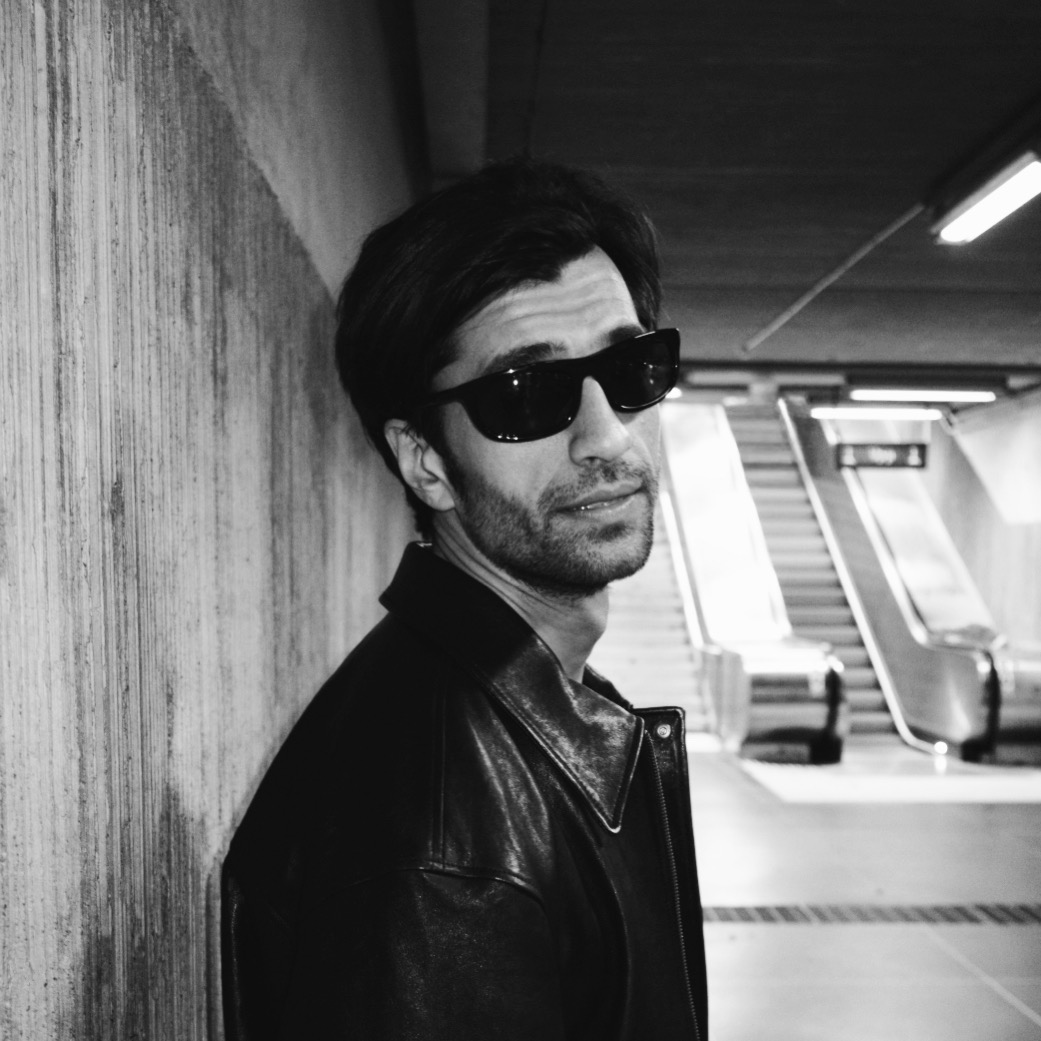
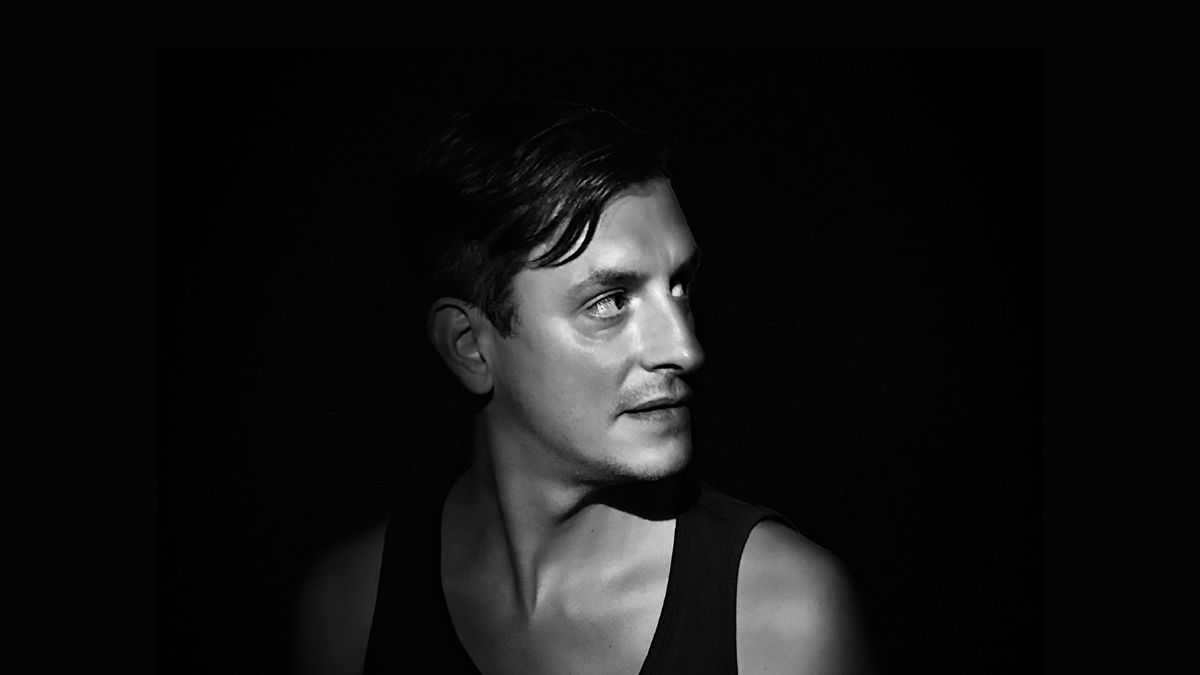
After years of creative evolution, Basic Shape unveils Fortress of Solitude — a bold full-length album released via Diffuse Reality Records. Blending deep, raw, and atmospheric techno with flashes of electro and IDM, the record feels like both a declaration of identity and a moment of reflection.
Produced in near-isolation in Trondheim, Norway, Fortress of Solitude explores resilience, self-discovery, and the blurred line between solitude and loneliness. Across ten tracks, Basic Shape channels the spirit of Detroit and Berlin’s techno heritage through analog gear, instinctive production, and an unmistakably personal lens. This is not just a collection of club tracks—it’s a statement: a return to roots, a rebellion against conformity, and a reminder that underground techno still has stories to tell.
Connect with Basic Shape on Soundcloud
Basic Shape’s Fortress Of Solitude is out on Beatport, Spotify.
Concept & Creation
The title Fortress of Solitude immediately evokes isolation, introspection, and maybe resistance. What does it mean to you personally?
Exactly what you said. Moving from a city like Barcelona (Spain), with a few million inhabitants, to Trondheim (Norway) was a huge change. Even being the 3rd or 4th biggest city in Norway, I always had the feeling of living in a small village. People there are not really social, and the closest thing I call a city is like 8 h drive, Oslo.
Trondheim, apart from 2 clubs and a couple of parties of no more than 200 persons, is not really an electronic scene; it’s more of a niche. Because it is always the same people. So I also felt isolated from electronic culture. That isolation made me realise that loneliness is not the same as solitude. Solitude is when you learn to be with yourself, accept your dark side and enjoy the moments when you are alone. In my case, alone in my studio with my music and inner world, my own fortress of solitude, which protected me from my environment.
And yes, it is also resistance there, resistance for all I had to endure all these years there. Just for being a foreigner and a person with a strong character and clear and founded values. The gatekeeping, ghosting, tribalism and many negative factors I didn’t expect to find there from the people who love the same music as I do.
That, without mentioning the constant fight I had to endure against the family system of that country, ending with me being a victim of parental alienation, false accusations, defamation, and racial and gender discrimination and years without being able to share my life with my kid. This has ended up with me planning to move back to Spain next year.
There are 10 tracks on the album. Was it composed as a single narrative, or did the structure evolve more organically over time?
No, it was not composed as a narrative. The truth is that the majority of underground techno labels I like are quite difficult to get into. Most of the time, they work with the same artists and rarely accept demos. This took me to naturally develop my softer side, which is my project as Pedro.
So, after a few years releasing a few singles on Tronic, Tanzgemeinschaft or directly on Bandcamp, I started carefully checking which ones of all of those labels were supporting new names and had a more open mindset. And on that list was Diffuse Reality, a label I have followed since its creation. I sent them 3 tracks, and they told me they really liked my sound. They asked if I could send them 10 tracks.
Little did I know they would offer me to release an album in this fast-consuming era we are living in. So, I decided to do something completely different to my previous album. Instead of a journey, a declaration of intent, saying this is Basic Shape and all these tracks with different aesthetics inside techno and electro is what I will do on this project.
How did your creative process shift while working on a full-length album versus EPs or singles? Was there more pressure, or more freedom?
There is definitely more freedom when I do singles or in some EPs, I tried to more or less fit the label’s style. When I do an album, it has to be 100% me. Albums must represent who you are and define your sound as an artist.
What role does hardware or specific gear play in your production workflow for this album? Any tools that became central to the sound?
On Fortress of Solitude hardware has an important role. Firstly, because I love the sound of it, but also because it was part of that declaration of intent. I wanted a more raw sound, less produced and more visceral than with my project as Pedro Sanmartín, and using hardware is the best way to get it in my opinion. It also helps me with the workflow as all is more hands-on and spontaneous. That helps me simplify the tracks, plus I was pretty clear I wanted to create an opportunity to play these tracks live, so I can present the album at venues.
In this particular case, the essential hardware for the album is the MAM MB33, an analog emulator of the legendary Roland TB 303, Microkorg for textures, Crave for bass lines and drone sounds and analog rhythm from Elektron for the majority of the beats.
Sound, Texture & Influences
The sound on Fortress of Solitude leans deep, raw, and atmospheric. Which sonic references or influences helped shape this mood?
Well, as the idea was to recover my musical roots, I took inspiration from the early techno sounds coming from Detroit and Berlin, the electro sound of Rotterdam labels like Delsin or the IDM of Warp and Aphex Twin. Ambient works 1 and 2 are some of my greatest inspirations.
There’s a balance between abstraction and groove in the album — was that contrast something you consciously aimed for?
Definitely, I wanted to do something Club-ready, so groove had to be an essential part of it, the experimentation comes from how I understand Techno it must be forward thinking, sci-fi and futuristic, besides was also a way to separate both of my projects.
Were there particular moments or tracks during the making of the album that surprised you — something that took an unexpected turn in the studio?
Well, some tracks I had to record a few times. Neurogenesis or Force majeure, for example. They turned deeper than I expected or had intended to. Trial Error for example, helped me prove to myself that I can simplify a track to its core. Something I struggled to do for many years, as I have been an on-the-box producer for many years. That made me get lost in irrelevant details and long structures that did not make much sense. It showed me the musical maturity I have been able to reach. Another example is Speed light the only track in the album made 80% with samplers, I normally like to do my own sound design.
Scene, Label & Vision
How did your connection with Diffuse Reality come about, and why did this feel like the right home for the release?
As mentioned, I started following the label from day one, about 13 years ago. Back in the days when some random person called Julian Amado added me on Facebook and invited me to follow the project. I have seen them grow and that’s something I value. As they are partly based in 3 cities I keep close to my heart: Barcelona, my hometown, Berlin (I lived in Germany for 2 years) and Buenos Aires same city my best friends Fran and Martin come from. So, I felt connected, I like what they release, and we have many friends in common. Plus, they support new names. It was the best option I could think of.
How do you see this album fitting into or reacting against the current state of underground electronic music?
With the rise of social media, I see that the new generation may be really good at what they are doing. But many have no clue of the origins and history of techno and electro music, doing a blend of trance, eurodance, and gabber-ish thing that they call techno. In my opinion, this is far from it. My idea was also to educate some of them and reclaim the origins of the sound without sounding old. To do an ode to what I call the holy trinity of electronic dance music, House, Techno and Electro.
What do you hope listeners walk away with after experiencing Fortress of Solitude — especially those hearing Basic Shape for the first time?
On the last year many people has tried to box me as an organic or progressive artist, which I am not I’m multigenre, always underground but I touch many genres and my roots are on detroit and berlin techno, chicago house, french touch but most of it electro, So I hope people start seeing me as I truly am, I hope they are gladly suprised and most importantly they enjoy every track I do.
Thank you.