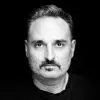
Brooklyn-based DJ and producer James Wyler returns with Groovy, a two-track release on DPE built around rhythm, tension, and true dancefloor control. With Groovy and Shango, he delivers two focused club cuts rooted in house, minimal tech, Afro and Latin rhythms, while keeping the sound sharp enough for today’s underground floors.
In this interview, Wyler talks about how New York shaped the way he hears music, why groove remains the foundation of his productions, and how small details can keep a stripped-back track alive without forcing the energy. He also opens up about the creative ecosystem around RISQUÉ in Brooklyn, the impact of support from artists such as Jamie Jones, Marco Carola, and Joseph Capriati, and why his next chapter is likely to move in a more unexpected direction.
Origins, New York & Musical Identity
You’re based in Brooklyn, a city with such a deep musical and club history. How has New York shaped the way you hear rhythm, groove, and dancefloor energy?
The music scene here in New York is unlike anywhere else. The crowds here have a certain energy and musical intelligence that really pushes you as a DJ. Being surrounded by that has opened my mind creatively and made me much more comfortable taking risks in my sets, whether that’s playing something unexpected, shifting the energy, or trusting a groove longer than I might have before.
That mentality has definitely carried over into my productions too.
I’m always thinking about how a record is going to feel in a room and how the smallest changes can completely shift the energy of a dancefloor.
Your sound draws from old-school house, Latin and Afro rhythms, disco, funk, and underground house. Were those influences always present, or did they become clearer as your production style developed?
Not always. I think natural progression has drawn me there as I have gone through different experiences across the world. I was very big into the minimal glitchy sound for a long time. Over the last few years, my sound has naturally shifted toward something more rooted in house, with stronger Afro, Latin, funk and disco influences.
Travelling, playing in different places and being exposed to different crowds and cultures has definitely played a role in that. I still love the stripped-back groove and detail of minimal, but now I find myself combining that with more percussion, rhythm, soul and musicality. It feels like a more complete representation of where I am as an artist today.
A lot of your music seems to put movement first. When you’re producing, do you usually start with drums and groove, or does the idea come from somewhere else?
It really depends on how I’m feeling that day. I try to start every studio session with a new intention rather than forcing myself into the same process every time. Sometimes that means finding a sample that immediately inspires me and building everything around it, but more often than not drums are my go-to starting point.
For me, if the groove isn’t there I have a hard time carrying the record forward. I need to feel that movement early on because it usually becomes the foundation for everything else. Once the drums and groove are working, the rest of the record tends to come together much more naturally.
The New Release: Groovy / Shango
Your new release on DPE is built around two tracks, Groovy and Shango. What connects these tracks for you, and why did they feel right together as one EP?
Groovy is definitely the more peak-time track of the two. It has that driving groove that really locks the dancefloor in and keeps the energy moving. Shango has a bit more of a switch-up, especially with the Afro-influenced vocal and rhythmic elements, which gives it a different character while still living in the same world.
I think that contrast is actually what made them feel right together. They each bring a different energy, but both are built around groove and movement
Groovy is a very direct title. What makes a track truly “groovy” for you? Is it swing, bassline, repetition, tension, or something more instinctive?
For me, it’s really about the tension in the breaks. Tension and release is such a big part of what gives a track impact in the club. I love building that anticipation and then bringing the groove back in at the right moment. It’s something I try to incorporate into all of my productions because when you get that balance right, you can really feel the reaction on the dancefloor.
Shango brings a slightly more atmospheric and percussive energy. What was the starting point for that track, and did the title guide the mood in any way?
The main vocal sample was really the starting point. As soon as I heard it, I knew exactly what I wanted the end result to feel like, something fun, with a nice swing to it that would work perfectly for those daytime party groovers.
Both tracks feel designed for proper sound systems. How much do you think about club impact, low-end pressure, and room response while producing?
It’s always one of my main focuses. I’m a DJ first, so when I’m producing, I’m constantly thinking about the dancefloor and how I can create moments in a track that people are going to remember.
Every DJ knows there’s no better feeling than when you’re completely in the pocket, and there’s this connection between you and the dancefloor where everyone is locked into the same moment.
That’s the feeling I’m always chasing with my music. I want to make records that give DJs the opportunity to create those moments.
Production, Groove & Dancefloor Function
Your tracks often work through subtle movement rather than obvious peak-time moments. How do you keep a track engaging while staying stripped-back and restrained?
It’s all about the small changes throughout. With these more stripped-back, swung tracks, there’s a really thin line between something feeling too repetitive and having just enough movement to keep the listener and the dancefloor engaged. It can be as simple as bringing a percussion element in and out, changing a drum pattern slightly, or introducing a new texture at the right moment.
There’s a balance in your music between classic influences and a modern minimal-tech edge. How do you avoid sounding too nostalgic while still honouring the foundations?
I think the biggest thing is taking inspiration from the past without trying to recreate it. I’m constantly digging through older house, disco, funk and Latin records, and I love the rawness and groove those records have, but I’m always thinking about how I can take those influences and make them work in a modern club setting. For me it might be a certain percussion pattern, vocal, bassline or even just the feeling of an older record that sparks an idea. I think that balance is what keeps the music feeling familiar while still sounding fresh.
You’ve had support from names like Franky Rizardo, Marco Carola, Jamie Jones, Miguelle & Tons, Joseph Capriati, Mason Collective. Does that kind of feedback influence your confidence or direction in the studio?
It doesn’t get much more motivating than that. Getting the stamp of approval from people I’ve looked up to for years makes all the long hours in the studio worth it.
It’s crazy because the support videos never get old either. Every time a new one comes through you still get that same feeling, especially with how big house music has become. Seeing something you made in the studio being played in front of 5, 10, 15 thousand people is something that’s hard to put into words.
I wouldn’t say it changes my direction creatively, but it definitely gives me confidence that what I’m doing is connecting on the dancefloor and pushes me to keep developing my sound.
Scene, RISQUÉ & What Comes Next
Alongside your work as an artist, you’re also involved with RISQUÉ in New York. How does being part of that creative ecosystem feed back into your own music and DJ sets?
RISQUÉ has become a huge part of my creative world in New York. It’s Shahar and me (who originally founded the brand), and we’ve naturally taken on different sides of it. I focus more on the label and producer community while he leads the party side, but everything ultimately feeds into each other.
A big part of that ecosystem is our shared studio in Brooklyn, RISQUÉ Studios. It’s become a real creative hub for us. We’re constantly having touring artists, producers and musicians coming through, sharing ideas, working on music and bringing different influences into the room. Being surrounded by that kind of energy makes it difficult to become complacent when you’re constantly hearing something new or being challenged to approach your own music differently.
As we continue pushing RISQUÉ beyond New York and building it into a more international brand, I think that creative exchange has become even more important. The music being sent to the label lately has been incredible, and hearing what other artists are creating pushes both of us to keep evolving as well.
The parties influence the music, the music influences my DJ sets, and the community around the studio keeps inspiring what we want RISQUÉ to become.
Looking ahead after this DPE release, where do you feel your sound is heading next: deeper, tougher, more percussive, more playful, or somewhere unexpected?
Unexpected, for sure. I’ve had the opportunity to work with some amazing labels this year, but going into 2027, I really want to experiment more and keep pushing myself creatively. I’ve been working with some incredible musicians and vocalists, which has opened up a lot of new ideas and ways of approaching my music.
I also have a lot of collaborations in the works with some of my close friends in the scene who are really pushing the bar themselves. Being around people like that constantly inspires me to try new things, push boundaries, and keep evolving my sound.
James Wyler “Groovy” EP is out now on DPE
Grab it here – https://fanlink.tv/DP421