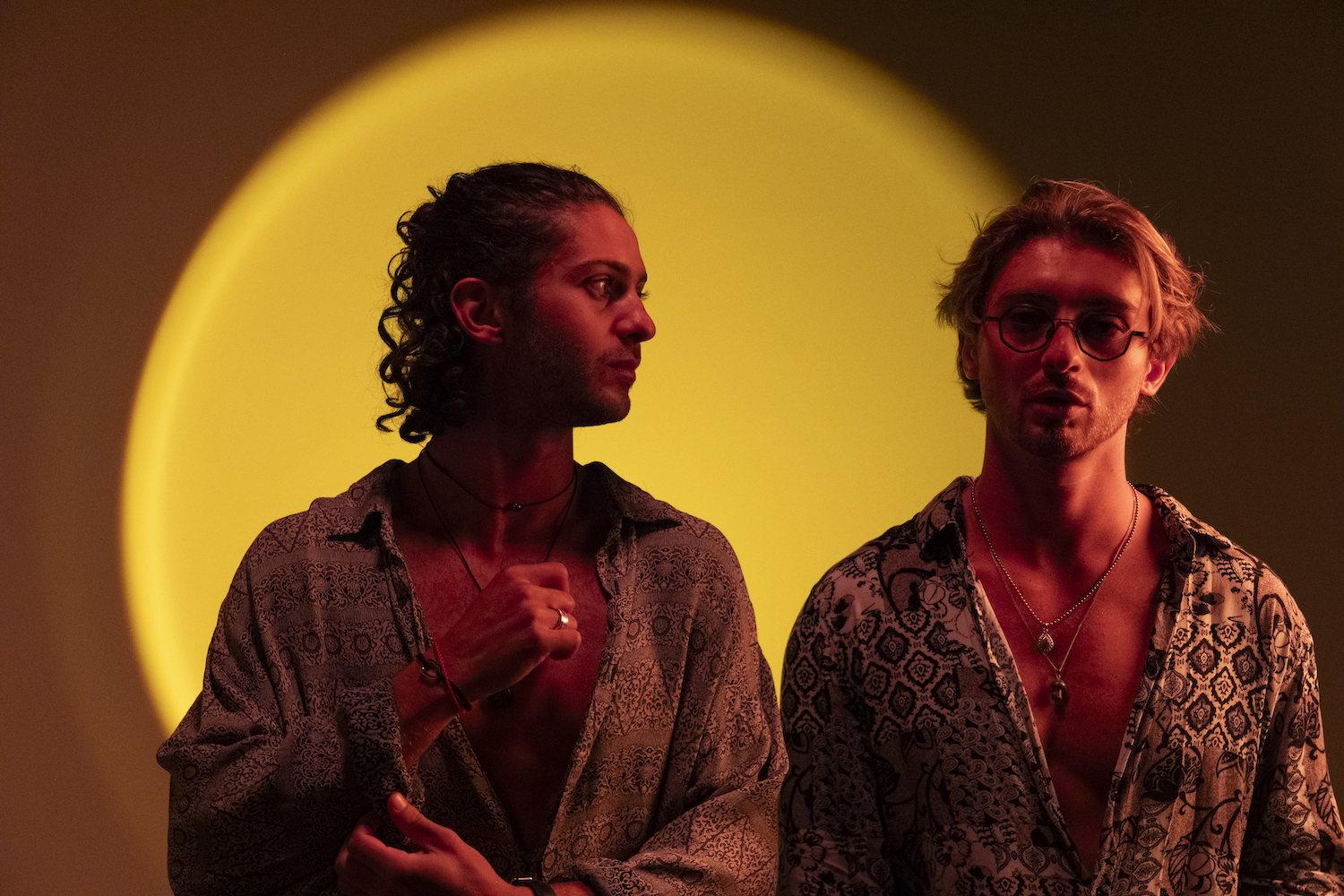
From intimate gatherings in St. Barths to international stages across the world, Giannni and Kasbï have been shaping a musical universe built around emotion, discovery and human connection. As the founders of Blue Iris, the duo has developed far beyond the traditional boundaries of a label, creating a global platform that brings together artists, audiences and immersive experiences across continents.
Their journey has taken them through some of the world’s most inspiring cultural and musical landscapes — from Ibiza and Saint-Tropez to Burning Man, Mykonos and beyond. Drawing from their backgrounds as musicians, their passion for artistic direction, and their deep belief in the power of community, Giannni and Kasbï have created a space where melodic house, indie dance and progressive sounds meet storytelling and shared experiences.
In this conversation with Tanzgemeinschaft, they discuss the meaning of community in today’s electronic music scene, the evolution of Blue Iris, the influence of travel and culture on their creativity, and their vision for the future of collective musical experiences.
Kasbï and Giannni, welcome to Tanzgemeinschaft and thanks very much for taking the time to speak with us today. How are you guys?
We’re doing great, thank you. We’re really happy to be doing this interview with you and to share more about our journey and vision.
Tanzgemeinschaft translates to “dance community” — what does community mean to you in the context of modern electronic music?
Community is essential to us. It’s made up of the people who connect with and follow our music, but also of the relationships we’ve built over time through our travels.
Whether in St. Barths, Seoul, Saint-Tropez or Los Angeles, we’ve met people who have become part of our extended family through music. Those human connections are at the heart of everything we do.
Blue Iris has grown into a global platform that connects artists and audiences across Europe, Asia, North Africa, the Caribbean and beyond. At what point did it stop feeling like a label and start feeling like something bigger?
Blue Iris started to feel like something bigger when we began producing our own events in St. Barths and booking artists such as Monolink, while also sharing the stage with artists like RÜFÜS DU SOL, Blond:ish and AMÉMÉ.
The announcement of our residency at Casa Amor Saint-Tropez was another major step. Being able to book artists we’ve admired for years made us realize that Blue Iris had grown beyond being just a label.
We also started receiving requests from other artists who wanted to release music on the label, which was another important milestone for us.
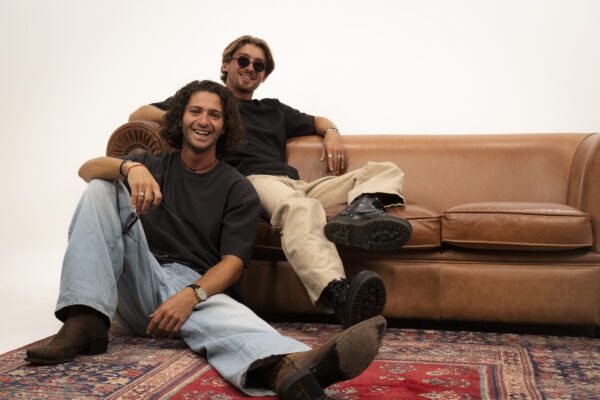
You spend a lot of time between places like Ibiza, Saint-Tropez, Mykonos, St Barts and Burning Man. How do these environments influence the way you think about music and gathering?
These environments have a huge influence on our music and on the way we see our artistic journey.
We remember coming back from Burning Man and spending an entire week talking about our careers, what we truly wanted to do, and realizing how deeply music had always been part of who we are, shaped by both our upbringing and life experiences.
Experiences like surfing in different parts of the world or even skydiving also have a strong impact on our creative vision. Being exposed to such different environments — from an intimate live guitar performance in a jazz club in New York to a massive stage at Burning Man — gives us a broader perspective on music and constantly inspires the way we create and bring people together.
You are also involved in artistic direction for spaces like the Y Knot Saloon Art Car camp at Burning Man. How does that level of curation differ from what you do as artists and label heads?
Artistic direction has always been something we naturally connect with because we find it easy to immerse ourselves in a place and help shape its identity.
Whether it was developing Leone Discoteca in Deauville and later in Marrakech, or creating our Saloon camp at Burning Man, we’ve always enjoyed understanding the spirit of a space and building upon it.
That said, for us, artistic direction remains deeply connected to our work as artists and label heads because it all revolves around music and storytelling.
It represents a musical universe that we sometimes adapt in order to create a fully immersive experience, allowing people to feel completely transported when they step into our Saloon or Art Car at Burning Man.
Do you think modern electronic music still has the same power to create collective experiences, or has that shifted in today’s global scene?
We believe electronic music is currently experiencing an exceptional moment because it has never brought so many people together. Of course, trends come and go, and some of them make electronic music increasingly commercial. But we see that as an opportunity rather than a limitation. It allows people who may not have been exposed to electronic music before to discover something new.
Some listeners naturally connect more easily with music that includes vocals, and certain genres provide that gateway. Over time, this can broaden their musical horizons and lead them toward more niche or sophisticated sounds they might never have explored otherwise. Today, electronic music is no longer just about music itself; it’s about community, shared experiences, travel and human connection.
Blue Iris spans melodic house, indie dance and progressive sounds. How do you maintain a sense of unity across such a wide musical spectrum in your events and releases?
We’ve always been deeply sensitive to melody. Whether it’s French variety, jazz or disco, melodic progressions have always been what moved us the most.
What we want Blue Iris to represent is not a specific genre, but rather music that carries emotion and has the ability to touch people on a deeper level. That’s really our musicians’ soul speaking.
Growing up playing instruments such as guitar, piano and drums has shaped our ears and naturally led us toward more melodic and progressive forms of expression.
There’s a strong emphasis on authenticity and human connection in everything you do. How do you protect that as Blue Iris continues to grow internationally?
We’ve always approached every encounter and every relationship with sincerity and from the heart.
As Blue Iris has grown internationally, it hasn’t weakened that authenticity — quite the opposite. Expanding globally has created even more opportunities to meet new people, discover different cultures and open ourselves to new possibilities.
In many ways, it has strengthened the human connections we’ve built because those cultural exchanges have become an essential part of who we are and what Blue Iris represents.
Looking forward, what kind of impact do you hope Blue Iris will have on how people experience electronic music together in the long term?
We hope Blue Iris continues to grow and evolves into a platform where artists we’ve admired for years, and who have inspired us to pursue this path, will one day release music on the label.
Beyond that, we want to create experiences on a larger scale through festivals and events, such as the festival we are planning in St. Barths this year, and eventually in places that hold a special meaning for us, like Bali.
Our long-term vision is to keep creating spaces where people can connect through music, emotion and shared experiences.
Thank you Giannni and Kasbï for sharing your story with us.
Thank you for having us. It’s been a pleasure sharing our journey with the Tanzgemeinschaft community.